Master Your Golf Swing Analysis: Data‑Driven Improvement Methods
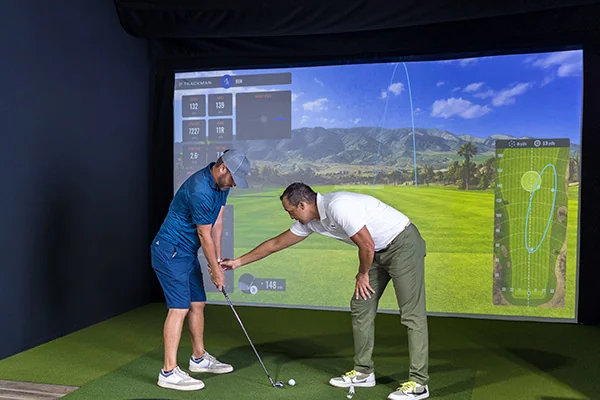
Golf improvement in San Antonio has evolved far beyond traditional range practice. Modern players now have access to technology that measures every detail of their swing, turning each shot into actionable data. This allows golfers to identify mechanical flaws, apply targeted adjustments, and build consistent performance over time. Indoor facilities like Fairway Golf Simulation make professional-grade swing analysis accessible for players of all levels, providing a controlled environment with high-definition simulators and launch monitors that capture every swing metric.
These simulators track ball trajectory, club speed, spin rate, launch angle, swing path, and face angle, translating raw numbers into insights that reveal what adjustments a golfer can make to improve. Understanding how golf simulators work is the first step in turning this data into meaningful performance gains. With accurate analytics, golfers can focus on correcting flaws, building on strengths, and practicing deliberately to achieve measurable improvements in confidence and consistency.
How Golf Swing Analysis Technology Works: Turning Data into Actionable Insights
Golf swing analysis uses high-speed sensors, launch monitors, and advanced software to capture every critical aspect of a swing. Systems like TrackMan measure club speed, swing path, face angle, ball speed, launch conditions, and spin rate, converting these variables into actionable performance metrics.
This data forms the foundation of modern indoor golf training. By measuring each component of the swing, golfers can identify inefficiencies and immediately test adjustments. The simulators also provide visual feedback, so golfers can see how small changes in mechanics affect ball flight.
Key Metrics That Inform Improvement
For data-driven improvement, it’s not enough to know the numbers; golfers must understand what to do with them:
Club Speed: Measures how fast the clubhead is moving at impact, affecting distance. Improving technique and timing can increase speed safely.
Ball Speed: Reflects energy transfer efficiency. Consistent strike location on the clubface raises ball speed.
Launch Angle: Determines ball trajectory. Adjusting ball position and swing plane can optimize carry and height.
Swing Path: Tracks the direction of the club through impact. Drills can correct outside-in or inside-out paths that produce slices or hooks.
Face Angle: Orientation of the clubface at impact affects shot direction. Grip and release adjustments can correct open or closed faces.
Spin Rate: Influences lift and stopping power. Centered contact and proper loft control optimize spin.
Each metric becomes actionable when paired with targeted drills, creating a feedback loop where data drives improvement. Systems at Fairway Golf Simulation make it easy to measure these metrics and immediately implement changes.
Data‑Driven Improvement Methods: From Measurement to Performance
Step 1: Capture Baseline Metrics
Every golfer begins by measuring their swing across multiple shots. Launch monitors and simulators collect detailed data on club speed, swing path, launch angle, and ball flight. This baseline identifies patterns and inconsistencies.
Step 2: Analyze Flaws
Data highlights which metrics fall outside optimal ranges. For instance, a golfer with a consistently open clubface at impact may produce slices, while a low launch angle could reduce carry distance. Each metric directly correlates to performance outcomes, showing, for example, how an open clubface can cause slices, a low launch angle can reduce carry, and inconsistent swing paths can affect accuracy.
Step 3: Apply Targeted Adjustments
Once problem areas are identified, golfers can perform specific drills to correct them:
Adjust grip, stance, or ball position
Work on swing plane through mirror or video feedback
Modify release and follow-through to square the clubface
Step 4: Validate Changes
After adjustments, immediate feedback from the simulator shows whether improvements have been achieved. Real-time visualizations reveal if the swing path is straighter, the launch angle is optimized, and spin rates are within ideal ranges. Using virtual golf technology, golfers can repeatedly test these adjustments in a controlled environment to reinforce consistent, data-driven improvement.
Step 5: Track Progress
Data-driven improvement is cumulative. By logging metrics over time, golfers can track trends, measure success, and refine techniques further. This process builds confidence as measurable gains are achieved.
Building Consistency Through Data-Driven Practice
One of the key benefits of using analytics is the ability to practice with purpose. Indoor simulators remove weather limitations and distractions, allowing golfers to focus on metrics that matter. For example:
Practicing with a focus on swing path and face angle reduces slice patterns
Tracking launch angle and ball speed improves carry distance
Repeated cycles of measuring, adjusting, and validating create muscle memory, helping players reproduce consistent swings. These methods are highlighted in the top benefits of indoor golfing.
Golf Simulators vs. Entertainment Venues
Unlike entertainment venues such as Topgolf, which prioritize social play, dedicated indoor golf facilities are optimized for performance improvement. Simulators allow players to:
Practice specific shots repeatedly
Adjust course conditions for tailored training
Access detailed metrics for each swing
These elements make simulator-based training an essential tool for serious golfers seeking measurable improvement. The combination of high-definition visuals, accurate analytics, and structured sessions demonstrates how indoor facilities maximize training efficiency and player development.
Year-Round, Data-Driven Practice
Indoor simulators allow golfers to practice regardless of the season. Winter sessions or rainy-day training remain productive, as players can simulate full rounds and continue tracking swing metrics. Virtual golf technology ensures players maintain consistency year-round while focusing on measurable improvements.
Experience Data-Driven Golf Training at Fairway
Modern golfers can access tools once reserved for tour professionals. Data-driven swing analysis allows players to identify weaknesses, implement targeted improvements, and track measurable progress over time. At Fairway Golf Simulation, players can:
Use high-definition simulators to test swing adjustments
Get personalized training and instructions for efficient sessions
By practicing deliberately with metrics guiding each swing, golfers can achieve measurable improvements, build confidence, and develop lasting consistency on the course.
More Articles You May Like
Master Your Golf Swing Analysis: Data‑Driven Improvement Methods
Golf improvement in San Antonio has evolved far beyond traditional range practice. Modern players now have access to technology that measures every detail of their swing, turning each shot into action...
How to Plan Corporate Golf Events in San Antonio That Impress Clients
Corporate golf events remain one of the most effective ways for businesses to build stronger client relationships, reward partners, and create memorable networking opportunities. In a relationship-dri...
Golf Simulator vs Topgolf: Which San Antonio Experience Fits You
San Antonio’s golf scene has expanded far beyond traditional tee times. Between advanced indoor golf simulators and the high-energy entertainment of Topgolf, players now have two very different w...